Skip to content

Turn user insight into shipped features

Palette is an agentic research and product-development platform that gathers user insight, validates what to build, and turns findings into shipped features. Get on the waitlist →

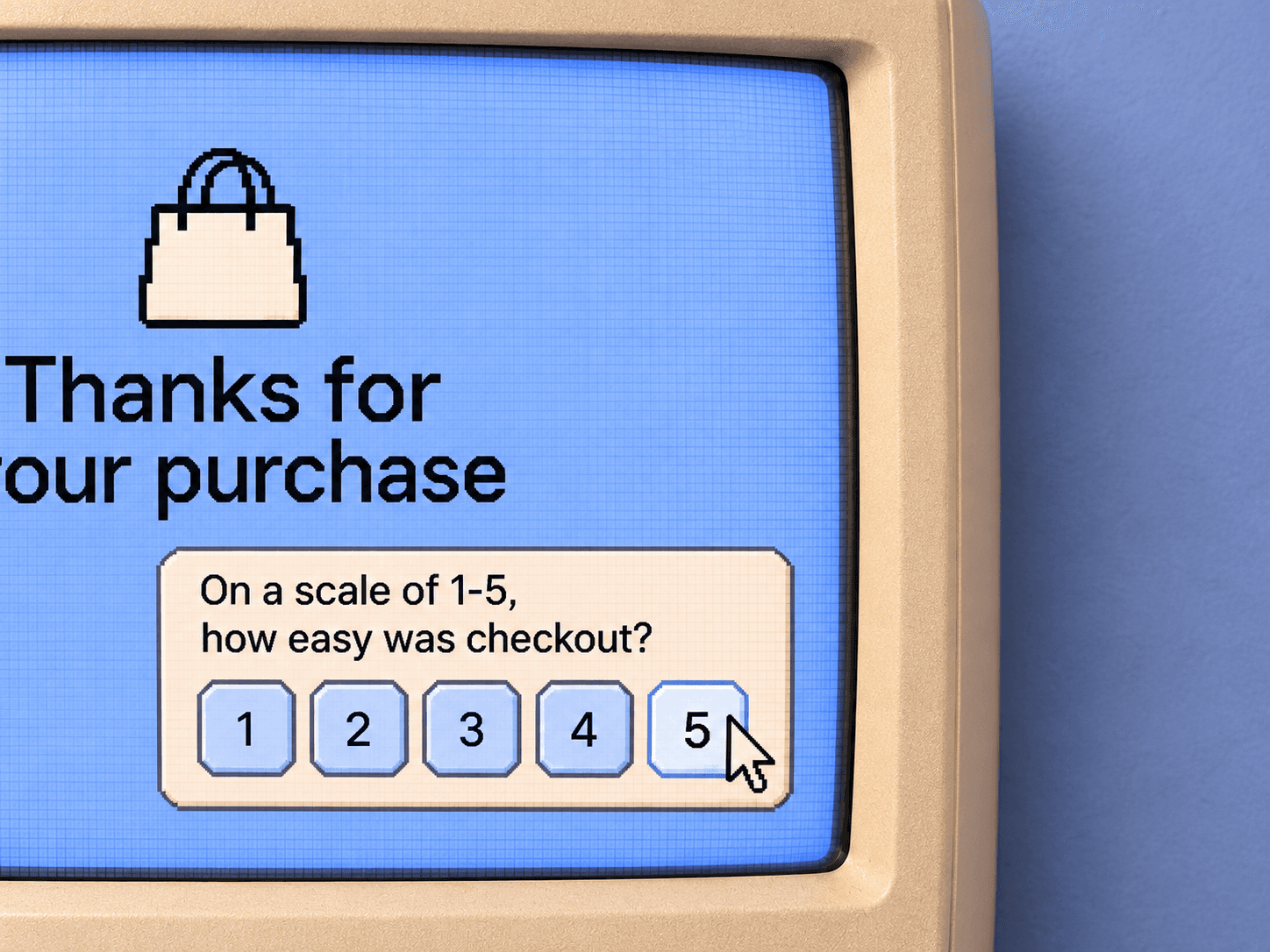
A stream of evidence from many sources converges into one ranked opportunity. The opportunity expands to show its summary, score, source mix across six collection types, supporting quotes, and claim types. Five more ranked opportunities arrive beneath it. The opportunity clears, a branching Shape plan reaches Acceptance, and an implementation-ready specification appears beside a Palette chat. Shape then becomes a Build workspace: Palette implements guest checkout, accepts a request to make its button black, and leaves the completed change ready for review. Open PR is pressed; the pull request appears, moves from Open to Merged, and clears before the feature is deployed to acme.com. A shopper checks out and reaches order confirmation. Five live microstudies then appear on confirmation-page copies. The selected response becomes fresh evidence as the story begins again. Once the complete evidence field returns, it advances one row so the new response yields to the same opening view.

Flow

Autonomous by design. Fully adjustable to your workflow.

How Palette works: signal from your connected tools, documents, and interviews is distilled into insight in one evidence graph. Palette ranks the opportunities the insight supports, develops the strongest one through its Shape method, and after your approval builds it. Once shipped, Palette compares before and after. User signal in, a built feature measured against the original insight out.

Insight
Opportunities
Shape
Compare
Build

Palette collects user insight on its own

Palette collects user insight autonomously and continuously, so your workspace always has the most current picture of what users want and think about your product. Every insight is backed by a real source and weighted by relevance before being added to the workspace's evidence graph.

How Palette collects insight

User studies

Palette creates, recruits, and conducts AI-moderated interviews with real people for in-depth insight on your product, market, and competitors. The interviews are dynamic: Palette asks follow-up questions to surface the insight that only comes forward in conversation.

Usability studies

Palette gives users a goal on your real product and studies how they reach it. The results are parsed, analyzed, and converted into insight.

Microstudies

Palette identifies what it needs to learn about your product, writes questions, and places them on your site for users to answer: autonomously and always with your approval.

Integrations

Palette plugs into the tools your team already uses and reads the user signal that lands in them.

Screen observer

Always on by default. Palette watches every session of your product in use, finds the friction, and collects it as insight.

User voice

Palette launches armies of subagents to read the latest community threads, review sites, social posts, and more to understand what your users say.

34

Users talked to today

1,284

Signals considered across 146 sources

6

Opportunities identified

3

Opportunities being developed

Insights are understood by Palette and turned into feature proposals

Palette groups related user insights that tell the same story and turns them into feature proposals. Each proposal is ranked by the strength and relevance of its supporting evidence, with every insight and source fully transparent to your team. The result is a consistent, evidence-backed ranking of the features your users want most.

Opportunities

How an opportunity is made: Palette reads a mass of raw user signal and resolves it into insight, for example that users give up at checkout. Each insight is weighed, then filed with the claims that tell the same story. The opportunities that emerge are ranked by deterministic arithmetic over the weight of their evidence. Simpler checkout leads the ranking here at 78 of 100. This is a consistent evidence ranking, not a prediction of what the team should build.

Converting a proposal to a spec

Palette turns a proposed feature into a build-ready specification by considering all the context in your workspace, including previous feature specifications, research, and studies. Based on this context, Palette develops a spec draft, and then validates its hypotheses with users, builds prototypes, runs usability tests, and uses the resulting evidence to keep the feature aligned with the user demand that prompted it.

How Palette shapes a feature: from the winning opportunity the agent explores on its own, branching into every path worth testing. Paths that do not survive the evidence simply end. One path survives to the end: a feature ready to build, every step supervised by you.

Shape

Every step is recorded in Palette's decision graph, where each node shows Palette’s reasoning, the evidence collected, and the decisions made along the way. The process is designed for collaboration: Palette can gather and synthesize far more context in far less time, while people contribute judgment and product understanding Palette may not have. Palette gathers the evidence, presents the context, and proposes decisions; your team can review, guide, or make those decisions as the specification develops. It is a new and better way to develop features, one that considers more context and makes every decision easy to trace back to real evidence. If you want Palette to work fully autonomously in the feature spec development process, you can specify so in the workspace settings.

Palette

8 of 10 participants stopped at the account form and didn't proceed with checkout. I suggest we proceed with studying how adjacent companies handle checkout flows to see how they differ from ours in order to understand the low checkout success rate.

All 10 were asked to complete the purchase in their cart.
Participant 1
Participant 2
Participant 3

Usability test completed in 6 minutes 12 seconds. Abandoned the flow when checkout demanded an account.

Participant 4
Participant 5
Participant 6

With our current implementation, the customer must have an account to checkout. I suggest we add a 'checkout as a guest' button allowing non-users to checkout.

Noted. I'll record that in the feature spec.

Steer Palette

Palette turns an evidence-backed feature specification into tasks, writes and previews the implementation, accepts direction while it works, and compares matched user outcomes after the feature ships.

Turning a spec into a PR

Palette turns the feature spec developed in Shape into an implementation task that it executes. Any feature spec can be sent to your favorite workflow tool instead of being built in Palette.

You can join the build by prompting Palette as you do with your existing coding tools, or let Palette run by itself. Palette can automatically open and merge PRs for a fully autonomous workflow.

A cropped implementation file for the guest checkout feature. Palette writes imports, state, session creation, submission, error handling, and the checkout form from top to bottom.

Build
Compare

Palette compares before and after

After a feature ships, Palette measures its impact against the user insight that prompted it. Palette learns from the outcome, improving how it develops future feature specifications and recommends what to build next.

3 tasks

  • Add a guest checkout option to the payment step.
  • Skip account creation for guest checkout.
  • Style the checkout button to match the primary action.

Make the button black, our inverted color.

Updated. The checkout button now uses the inverted fill.

Request a change…
OriginalParsed value
window.duration.days14.000000000000
payment.sessions.matched4812.000000000000
payment_step.completion0.610284719302
account_step.abandonment0.341028461293
purchase.duration.normalized0.581842210930
guest_route.exposure0.000000000000
checkout_api.success0.782410036925
guest_session.creation0.000000000000
receipt_email.completion0.603319427506
source_diversity.weight0.681240057193
evidence.confidence0.840001320771
evidence.recency0.702184259842
missing_evidence.weight0.290138014441
contradiction.penalty-0.126000040003
matched_window.confidence0.917042568021
outcome.rank_weight0.635079003118
NewParsed value
window.duration.days14.000000000000
payment.sessions.matched4965.000000000000
payment_step.completion0.821739104148
account_step.abandonment0.089733182405
purchase.duration.normalized0.390720184410
guest_route.exposure0.839996400218
checkout_api.success0.982661420042
guest_session.creation0.961840227519
receipt_email.completion0.874402190067
source_diversity.weight0.702385593104
evidence.confidence0.900000130058
evidence.recency0.780000000019
missing_evidence.weight0.218394756103
contradiction.penalty-0.050219840067
matched_window.confidence0.993158610437
outcome.rank_weight0.839996400218

Palette compares before and after

After a feature ships, Palette measures its impact against the user insight that prompted it. Palette learns from the outcome, improving how it develops future feature specifications and recommends what to build next.

Old version

OriginalParsed value
window.duration.days14.000000000000
payment.sessions.matched4812.000000000000
payment_step.completion0.610284719302
account_step.abandonment0.341028461293
purchase.duration.normalized0.581842210930
guest_route.exposure0.000000000000
checkout_api.success0.782410036925
guest_session.creation0.000000000000
receipt_email.completion0.603319427506
source_diversity.weight0.681240057193
evidence.confidence0.840001320771
evidence.recency0.702184259842
missing_evidence.weight0.290138014441
contradiction.penalty-0.126000040003
matched_window.confidence0.917042568021
outcome.rank_weight0.635079003118

New version

NewParsed value
window.duration.days14.000000000000
payment.sessions.matched4965.000000000000
payment_step.completion0.821739104148
account_step.abandonment0.089733182405
purchase.duration.normalized0.390720184410
guest_route.exposure0.839996400218
checkout_api.success0.982661420042
guest_session.creation0.961840227519
receipt_email.completion0.874402190067
source_diversity.weight0.702385593104
evidence.confidence0.900000130058
evidence.recency0.780000000019
missing_evidence.weight0.218394756103
contradiction.penalty-0.050219840067
matched_window.confidence0.993158610437
outcome.rank_weight0.839996400218

Self-improving. Better features.

The setup, in full.

GitHubNot connected
</main>
</body>

Frequently asked questions

What is Palette?
Palette is an agentic research and product-development platform that gathers user insight, validates what to build, and turns findings into shipped features. From insight to build, in one place.
How does Palette gather user insights?
Palette does the research for you. It autonomously runs microstudies, user studies, and usability studies, and analyzes community conversations and product usage sessions. The research is done continuously, keeping your team up to date with what users say and how they use your product. Palette can also connect to the tools where your existing user signals live, including Slack, Linear, Jira, Google Drive, Figma, GitHub, and HubSpot.
How much does Palette automate, and how much do I do?
Palette is designed to work autonomously, from gathering user insights to building features. You choose where it pauses for approval or feedback. For example, Palette can gather insights on its own and bring you in when feature development begins. Every part of Palette's workflow can be customized in settings to fit how your team works.
Can I use Palette outside the web app?
Yes. Palette works in Slack and through its MCP server for Claude Code, Codex, and Cursor. This lets you and your team access your workspace’s user insights, launch studies, and ask Palette for guidance throughout the product development process, all from the tools where you already work.
How do pricing and credits work?
Anyone can sign up and use Palette for free. Free includes 500 credits for your first workspace. When you’re ready to bring in your team, you can upgrade your workspace to Pro for $20 per member per month, with unlimited collaborators. Palette uses workspace credits for actions such as launching user studies and usability studies or building features. You can purchase credits at any time, and they never expire. Palette shows the cost before every credit-spending action and asks for your approval. You can turn these approval prompts off or specify a price range in which they are automatically approved in workspace settings for a more autonomous workflow.
How do I get access?
Join the waitlist with your email. Palette is inviting people in waves, and we’ll email you when it’s your turn to access Palette.